

2 min
- Hábitos Alimenticios
¿Qué dieta puede ayudar contra el estreñimiento?
Si estás estreñido, es posible que sientas que tu cuerpo te está reteniendo como prisionero. Afortunadamente, hay varias cosas que puedes hacer, incluyendo cambios en la alimentación, que podrían ayudarte.
En este artículo exploramos algunos remedios caseros para el estreñimiento con respaldo científico, ajustes dietarios que podrían servirte, y otras soluciones para recuperar la alegría de un satisfactorio momento en el baño.
¿Qué alimentos son buenos para el estreñimiento?
Los laxantes son una alternativa segura para ayudarte a recuperar el ritmo natural intestinal2 ,especialmente si el estreñimiento ha afectado tu bienestar. Sin embargo, antes de acudir a medicamentos, podrías probar con remedios caseros para ir al baño.
Aquí te presentamos algunos alimentos que funcionan como laxantes naturales y ayudan a que tu sistema digestivo vuelva a funcionar con normalidad:
Ciruelas pasas
Estas frutas secas están llenas de fibra, fructosa y sorbitol, todos con propiedades laxantes que ayudan a aliviar el estreñimiento.2
Kiwi
El kiwi es rico en fibra, lo cual aumenta la frecuencia de las evacuaciones. Esto se debe a que la fibra aporta volumen a las heces, generando una mayor necesidad de ir al baño.2
Semillas de sésamo
Las semillas de sésamo mejoran el tiempo de evacuación y reducen el dolor y malestar al defecar. Actúan atrayendo agua a los intestinos, funcionando como un lubricante natural.8
Té de jengibre
El jengibre estimula la actividad muscular del sistema digestivo, mejorando la regularidad intestinal.
Vegetales de hoja verde
Verduras como el espárrago, el brócoli y la col rizada (kale) son excelentes fuentes de fibra que pueden ayudar a aliviar el estreñimiento.10
Grasas saludables
Algunas grasas como el ácido palmítico presente en la leche tienen propiedades que suavizan las heces y facilitan su expulsión.11,12
Uvas pasas
Estas pequeñas delicias también son ricas en fibra. Si tienes antojo de algo dulce y tu intestino necesita ayuda, las pasas pueden ser una buena opción.15
Hinojo
El hinojo es una planta aromática usada en la medicina tradicional. Estudios muestran que sus componentes pueden estimular el movimiento del colon y facilitar la eliminación de desechos.16
Miel
La miel puede aliviar el estreñimiento al aumentar el contenido de agua en las heces y favorecer el crecimiento de bacterias saludables que estimulan la digestión.17
¿Qué alimentos empeoran el estreñimiento?
Así como hay alimentos que ayudan a combatir el estreñimiento, hay otros que lo pueden empeorar. Si sufres de estreñimiento, trata de evitar los siguientes:
Comida rápida
Cuanto más consumes comida rápida, mayores son las probabilidades de desarrollar trastornos digestivos como el estreñimiento. Esto se debe a su alto contenido en azúcar, grasas trans y sodio.18
Alimentos ultraprocesados
Suelen contener grandes cantidades de grasas saturadas, azúcar y sodio, lo que puede generar problemas intestinales.20
Productos de panadería refinados
Dulces horneados con alto contenido de grasa y bajo en fibra ralentizan la digestión y dificultan las evacuaciones.20
Frituras
Los alimentos fritos están cargados de grasas saturadas, lo cual disminuye la velocidad con que el estómago elimina los desechos, favoreciendo el estreñimiento.4,22
Consejos adicionales para evacuar de forma saludable

Aumentar el consumo de fibra
La fibra agrega volumen a las heces y actúa como un ablandador natural. Si no estás acostumbrado, aumenta la cantidad poco a poco para evitar gases o hinchazón. La fibra insoluble es ideal, aunque también existen suplementos.
Tomar suficiente agua
El agua es esencial para la digestión. Asegúrate de consumir suficiente líquido a diario, ya que puede tener un impacto positivo en tu salud intestinal.23
Hacer ejercicio regularmente
La actividad física estimula el movimiento intestinal. Desde una caminata suave hasta una rutina más intensa, el ejercicio favorece la digestión y puede ayudarte a ir al baño con mayor facilidad.24
Reducir el estrés
Quienes padecen estreñimiento tienden a presentar mayor ansiedad o estrés. Controlar el estrés puede ser clave para mejorar el tránsito intestinal.26
Te toca a ti
Existen muchos alimentos y hábitos que pueden ayudarte a mejorar tu digestión. Pero no funcionarán si no los pones en práctica. Toma el control de tu bienestar y vuelve a disfrutar de tu cuerpo en armonía.
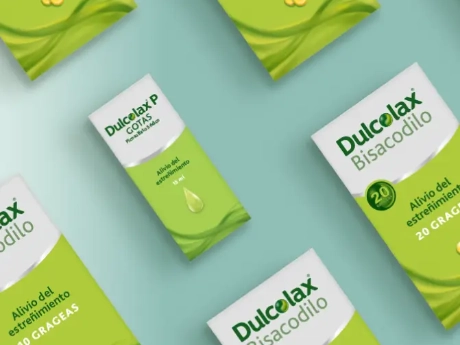
Si evitar ciertos alimentos y aumentar el consumo de otros no mejora tu situación, puedes probar con laxantes sin receta. Dulcolax® ofrece una línea completa de productos para ayudarte a aliviar el estreñimiento de manera efectiva y predecible.
*Actúa de 6 a 12 horas
Disclaimer:
Generado parcialmente por Gen AI.
Todo lo que necesitas saber acerca del estreñimiento














Encuentra tu Dulcolax®

- 3 días sin ir al baño4
- Alivio de la noche a la mañana*3
- Grageas

- Dosis flexible
- Alivio Suave
- Gotas
- Sin olor ni sabor
Referencias
- Khanna, S. (2020) Mayo Clinic on Digestive Health: How to prevent and treat common stomach and gut problems. Mayo Clinic Press.
- Bae SH. Diets for Constipation. Pediatr Gastroenterol Hepatol Nutr. 2014 Dec;17(4):203-208. https://doi.org/10.5223/pghn.2014.17.4.203
- Santucci, N.R., Chogle, A., Leiby, A., Mascarenhas, M., Borlack, R.E., Lee, A., Perez, M., Russell, A. and Yeh, A.M., 2021. Non-pharmacologic approach to pediatric constipation. Complementary therapies in medicine, 59, p.102711.
- Bagchi, D. and Ohia, S.E. eds., 2021. Nutrition and Functional Foods in Boosting Digestion, Metabolism and Immune Health. Academic Press.
- Brown SR, Cann PA, Read NW. Effect of coffee on distal colon function. Gut. 1990 Apr;31(4):450-3. doi: 10.1136/gut.31.4.450. PMID: 2338272; PMCID: PMC1378422.
- Ramos, C.I., de Lima, A.F.A., Grilli, D.G. and Cuppari, L., 2015. The short-term effects of olive oil and flaxseed oil for the treatment of constipation in hemodialysis patients. Journal of Renal Nutrition, 25(1), pp.50-56.
- Alookaran J, Tripp J. Castor Oil. [Updated 2022 Nov 21]. In: StatPearls [Internet]. Treasure Island (FL): StatPearls Publishing; 2022 Jan-. Available from: https://www.ncbi.nlm.nih.gov/books/NBK551626
- Ibrahim, H.M.O., 2019. A Novel Treatment for Constipation by Sesame Seeds. International Journal for Research in Applied Science & Engineering Technology (IJRASET).
- Dehghani, S.M., Bahroloolomifard, M.S., Yousefi, G., Pasdaran, A. and Hamedi, A., 2019. A randomized controlled double blinded trial to evaluate efficacy of oral administration of black strap molasses (sugarcane extract) in comparison with polyethylene glycol on pediatric functional constipation. Journal of ethnopharmacology, 238, p.111845.
- Barbara Bolen, P.D. (2022) Foods to eat and avoid when constipated, Verywell Health. Available at:https://www.verywellhealth.com/foods-to-ease-constipation-4143121 (Accessed: January 11, 2023).
- Gandy, J., Madden, A. and Holdsworth, M. (2020) Oxford Handbook of Nutrition and Dietetics. Oxford: Oxford University Press.
- Forsyth, J.S., Varma, S. and Colvin, M., 1999. A randomised controlled study of the effect of long chain polyunsaturated fatty acid supplementation on stool hardness during formula feeding. Archives of disease in childhood, 81(3), pp.253-256.
- Freitas D, Boué F, Benallaoua M, Airinei G, Benamouzig R, Lutton E, Jourdain L, Dubuisson RM, Maître X, Darrasse L, Le Feunteun S. Glycemic response, satiety, gastric secretions and emptying after bread consumption with water, tea or lemon juice: a randomized crossover intervention using MRI. Eur J Nutr. 2022 Apr;61(3):1621-1636. doi: 10.1007/s00394-021-02762-2. Epub 2022 Jan 11. PMID: 35013789.
- 7 reasons to start your day with lemon water (2023) Cleveland Clinic. Cleveland Clinic. Available at: https://health.clevelandclinic.org/7-reasons-to-start-your-day-with-lemon-water-infographic (Accessed: January 11, 2023).
- Bell, S.J., 2011. A review of dietary fiber and health: focus on raisins. Journal of Medicinal Food, 14(9), pp.877-883.
- Jang, S.H. and Yang, D.K., 2018. The combination of Cassia obtusifolia L. and Foeniculum vulgare M. exhibits a laxative effect on loperamide-induced constipation of rats. PloS one, 13(4), p.e0195624.
- Li, Y., Long, S., Liu, Q., Ma, H., Li, J., Xiaoqing, W., Yuan, J., Li, M. and Hou, B., 2020. Gut microbiota is involved in the alleviation of loperamide‐induced constipation by honey supplementation in mice. Food Science & Nutrition, 8(8), pp.4388-4398.
- Shau, J.P., Chen, P.H., Chan, C.F., Hsu, Y.C., Wu, T.C., James, F.E. and Pan, W.H., 2016. Fast foods-are they a risk factor for functional gastrointestinal disorders?. Asia Pacific journal of clinical nutrition, 25(2), pp.393-401.
- Foods for constipation (2022) Johns Hopkins Medicine. Available at: https://www.hopkinsmedicine.org/health/wellness-and-prevention/foods-for-constipation (Accessed: January 11, 2023).
- Rollet M, Bohn T, Vahid F, On Behalf Of The Oriscav Working Group. Association between Dietary Factors and Constipation in Adults Living in Luxembourg and Taking Part in the ORISCAV-LUX 2 Survey. Nutrients. 2021 Dec 28;14(1):122. doi: 10.3390/nu14010122. PMID: 35010999; PMCID: PMC8746799.
- Irastorza I, Ibañez B, Delgado-Sanzonetti L, Maruri N, Vitoria JC. Cow's-milk-free diet as a therapeutic option in childhood chronic constipation. J Pediatr Gastroenterol Nutr. 2010 Aug;51(2):171-6. doi: 10.1097/MPG.0b013e3181cd2653. PMID: 20453672.
- Zhang, Y., Lin, Q., An, X., Tan, X. and Yang, L., 2022. Factors Associated with Functional Constipation among Students of a Chinese University: A Cross-Sectional Study. Nutrients, 14(21), p.4590.
- Jangid, V., Godhia, M., Sanwalka, N. and Shukla, A., 2016. Water intake, dietary fibre, defecatory habits and its association with chronic functional constipation. Current Research in Nutrition and Food Science Journal, 4(2), pp.90-95.
- Tantawy SA, Kamel DM, Abdelbasset WK, Elgohary HM. Effects of a proposed physical activity and diet control to manage constipation in middle-aged obese women. Diabetes Metab Syndr Obes. 2017 Dec 14;10:513-519. doi: 10.2147/DMSO.S140250. PMID: 29276399; PMCID: PMC5734236.
- De Giorgio, R., Ruggeri, E., Stanghellini, V. et al. Chronic constipation in the elderly: a primer for the gastroenterologist. BMC Gastroenterol 15, 130 (2015). https://doi.org/10.1186/s12876-015-0366-3
- Chatterjee, P. (2019). Constipation: More than Just “A Symptom”. In: Health and Wellbeing in Late Life. Springer, Singapore. https://doi.org/10.1007/978-981-13-8938-2_5