How to Manage Constipation During Busy Work or School Days
Busy schedules, stress, dehydration, and long periods of sitting can contribute to constipation. This article explores how work and school routines affect digestion, practical strategies to support regular bowel movements, and when additional constipation relief options may help if lifestyle habits alone are not enough.
Between the rushed morning commute, a lunch eaten at your desk and back-to-back meetings or classes, your digestive system rarely gets a moment to catch up. If your schedule keeps derailing your bathroom routine, you're far from alone. The good news? Learning how to relieve constipation during busy days often comes down to small, manageable habits, such as staying hydrated, moving more, and giving your body time to respond. When lifestyle changes need a little extra help, a trusted option like Bisacodyl (Dulcolax) may support gentle, predictable relief.
In this article, we explore why hectic schedules can disrupt your routine and what you can do to help keep things moving.

 5 mins
Why Do Busy Days Cause Constipation?
Busy days can cause constipation because of stress, skipped meals, dehydration and holding in the urge to go all interfere with normal digestion. When your schedule takes over, your gut often pays the price 5,7.
Occasional constipation is common, affecting up to 31% of the general adult population and up to 44.5% of older adults1. During demanding work or school days, several everyday habits can quietly contribute to an irregular bowel movement:
- Grabbing food on the run: A pastry at the station or a vending-machine snack often means less fiber than a proper meal.
- Forgetting to drink water: When you're rushing between tasks, hydration is easy to overlook.
- Sitting for hours: Long stretches at a desk or in a lecture hall can slow things down.
- Holding it in: Skipping the bathroom because you're too busy—or avoiding a public restroom—can backfire over time.
- Disrupted sleep and routines: Late nights studying or early starts can throw your digestion off balance.
How Does Stress Affect Digestion?
Stress affects digestion through the gut-brain connection, a two-way communication system linking your brain and digestive tract. When you feel pressured, your body may slow down digestion, which can sometimes lead to constipation7.
Think about the run-up to a big deadline or exam week. During these high-pressure periods, your body redirects energy toward managing perceived demands, and normal digestive activity can take a back seat. This may result in a slower, less predictable bowel movement pattern7. Because responses can differ from person to person, some may notice these effects more than others.
Managing stress isn't only good for your mind—it may also help support a more regular routine.
How to Relieve Constipation During Busy Days
To relieve constipation during busy days, focus on hydration, fiber, movement and responding to your body's signals. When symptoms persist, a gentle over-the-counter option may help. Below are practical habits you can build into even the busiest schedule.
1. Stay Hydrated
Keep a water bottle at your desk or in your bag as a reminder to sip throughout the day. If you tend to reach for coffee during back-to-back meetings, try alternating each cup with a glass of water. Staying hydrated may help soften stool and support smoother digestion, especially when your routine feels rushed5.
2. Add Fiber Where You Can
Choose fiber-rich snacks that travel well, such as fruit, nuts, whole-grain crackers or vegetables. If your lunch usually comes from the cafeteria or a nearby café, look for a side salad, a piece of fruit or a whole-grain option. Small swaps can help support more regular bowel movements without requiring a major diet overhaul4,5.
3. Move Your Body
Even light movement may help stimulate digestion5. Try a short walk during your lunch break, take the stairs instead of the elevator or stretch between meetings and study sessions. A quick lap around the office or campus can make a difference.
4. Don't Ignore the Urge
When you feel the need to go, try not to delay—even if it means stepping away from your desk or using an unfamiliar restroom. Repeatedly holding it in can make an irregular bowel movement more likely over time4,5.
5. Manage Stress Where Possible
Simple techniques like deep breathing, short breaks or a few minutes of quiet can help ease tension during a demanding day. Because stress and constipation are often linked, calming your mind may also benefit your gut7.
6. Consider Gentle Support When Needed
If lifestyle changes aren't enough, a nonprescription laxative may help2,5. Bisacodyl (Dulcolax) contains bisacodyl, a stimulant laxative that is designed to act directly in the colon6. Unlike fiber, which can take time to work, bisacodyl has clinically proven efficacy and is designed to offer gentle, predictable relief when you need it3,6. It is also non-habit forming, so it is intended for occasional use rather than daily reliance6.
Depending on your needs, Dulcolax® Coated Tablets are designed to provide overnight relief within 6 to 12 hours, while Dulcolax® Suppositories are designed to work in about 20 to 30 minutes. When used as directed, bisacodyl (Dulcolax) is generally well tolerated, making it a gentle option for managing occasional constipation3,6. Always use as directed on the label, and for persistent or severe symptoms, consult your doctor or pharmacist.
When Should You See a Doctor?
You should see a doctor if constipation lasts longer than a few weeks, is severe or is accompanied by symptoms like significant pain, blood in the stool or unexplained weight loss. These may signal something that needs professional attention5.
While occasional constipation during busy periods is common, ongoing changes in your bowel habits are worth discussing with a healthcare professional. Individual results may vary, and a doctor or pharmacist can offer personalized advice suited to your situation.
Conclusion
A packed schedule can easily throw your digestion off balance, but a few consistent habits can help you stay on track. Drink water throughout the day, add fiber where you can, keep moving between meetings or classes, and respond to your body's signals when they come. When you need a little extra help, Bisacodyl (Dulcolax) offers gentle relief you can turn to as needed.
Bisacodyl (Dulcolax) is a non-prescription laxative brand in the Philippines, designed to work in harmony with your body so you can face each day feeling more comfortable. For persistent or severe symptoms, always consult your doctor or pharmacist.
If symptoms persist, consult your doctor.
MAT-PH-2601149 / Ver 1.0 / DA 08-2026 / DM 08-2026
Opella Healthcare Philippines Inc.
Frequently Asked Questions
Coffee may stimulate the bowels for some people, but it can also contribute to dehydration if it replaces water. On hectic days, try pairing each cup with a glass of water. Individual responses can differ, so notice how your own body reacts.
Long periods of sitting may slow digestion and contribute to irregular bowel movements. Building in short bursts of movement—like a walk at lunch or taking the stairs—may help. Even standing and stretching between tasks can support a more regular routine.
Repeatedly ignoring the urge to go may make constipation more likely over time. When possible, try not to delay, even during a packed schedule. Responding to your body's signals promptly is a simple way to support regularity.
It depends on the product. Dulcolax® Coated Tablets are designed to provide overnight relief within 6 to 12 hours, while Dulcolax® Suppositories are designed to work in about 20 to 30 minutes3. Always follow the directions on the label and use only as needed.
Nonprescription laxatives like Bisacodyl (Dulcolax) are generally well tolerated when used as directed. They are intended for occasional relief rather than daily use. If you find you need a laxative frequently, consult your doctor or pharmacist for guidance.
Dulcolax® range of solutions
Dulcolax® products help your digestive system get moving, with different reliefs available: overnight relief and fast relief so you can feel good inside and out!
-
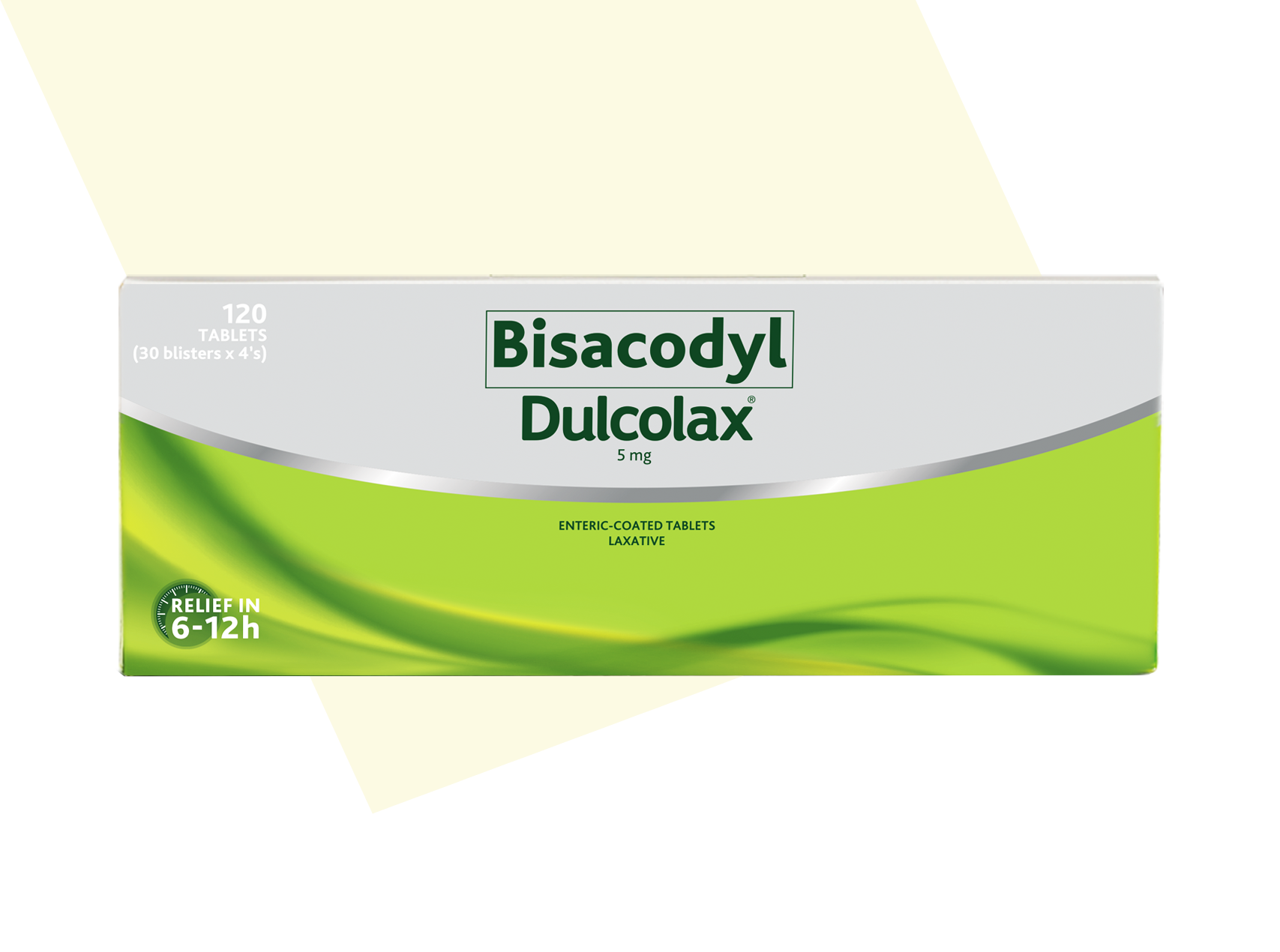
Dulcolax® Coated Tablets
Stimulates bowel movements by helping facilitate transit and evacuation of the stool overnight (between 6-12 hours)

Dulcolax® Adult Suppositories 10 mg
Stimulates bowel movements by helping facilitate transit and evacuation of the stool in about 20-30 minutes.
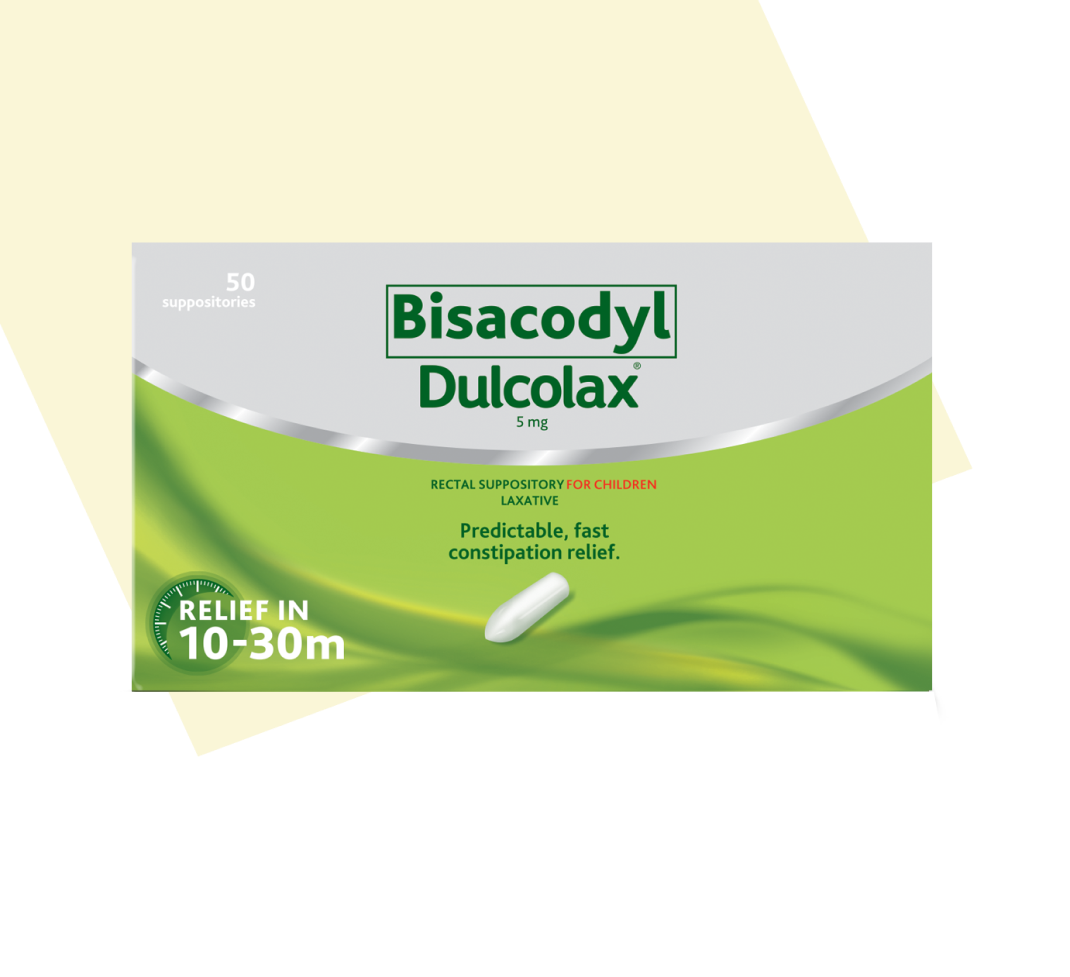
Dulcolax® Pedia Suppositories 5 mg
Stimulates bowel movements by helping facilitate transit and evacuation of the stool in about 20-30 minutes.
-
Dulcolax® Coated Tablets
Stimulates bowel movements by helping facilitate transit and evacuation of the stool overnight (between 6-12 hours)
-
Dulcolax® Adult Suppositories 10 mg
Stimulates bowel movements by helping facilitate transit and evacuation of the stool in about 20-30 minutes.
Dulcolax® Pedia Suppositories 5 mg
Stimulates bowel movements by helping facilitate transit and evacuation of the stool in about 20-30 minutes.
Stay informed
Constipation symptoms such as bloatedness, gassiness and hard dry stool can be extremely bothersome and persistent. Because we know how frustrating and stressful these periods can be, we can help identify the causes for constipation and how to prevent it.
.webp/jcr:content/Daily_Habits_card%20(1).webp)
Simple Daily Habits That Can Help You Poop More Regularly
5 daily habits that may help support regular bowel movements

Fiber or Laxatives for Constipation Relief: Which Should You Choose?
Fiber vs. laxatives: How to choose the right constipation relief

5 Everyday Habits
Stress can disrupt your digestive system, leading to issues like bloating and constipation. This article explores how stress impacts gut health and highlights practical tips and overthecounter options that may help support digestion and relief.

Stress and Digestion
Stress can take a toll on your digestive system, contributing to discomfort and constipation. Discover the link between stress and gut health, plus simple tips and over-the-counter relief options that may help support smoother digestion.
- Werth, B. L. (2019). Epidemiology of constipation in adults: Why estimates of prevalence differ. Journal of Epidemiological Research, 5(1), 37–49.
- Wald, A., Scarpignato, C., Mueller-Lissner, S., Kamm, M. A., Hinkel, U., Helfrich, I., Schuijt, C., & Mandel, K. G. (2008). A multinational survey of prevalence and patterns of laxative use among adults with self-defined constipation. Alimentary Pharmacology & Therapeutics, 28(7), 917–930.
- Kamm, M. A., Mueller-Lissner, S., Wald, A., Richter, E., Swallow, R., & Gessner, U. (2011). Oral bisacodyl is effective and well-tolerated in patients with chronic constipation. Clinical Gastroenterology and Hepatology, 9(7), 577–583.
- Müller-Lissner, S. A., Kamm, M. A., Scarpignato, C., & Wald, A. (2005). Myths and misconceptions about chronic constipation. American Journal of Gastroenterology, 100(1), 232–242.
- Camilleri, M., Ford, A. C., Mawe, G. M., Dinning, P. G., Rao, S. S., Chey, W. D., Simrén, M., Lembo, A., Young-Fadok, T. M., & Chang, L. (2017). Chronic constipation. Nature Reviews Disease Primers, 3, 17095.
- Corsetti, M., Landes, S., & Lange, R. (2021). Bisacodyl: A review of pharmacology and clinical evidence to guide use in clinical practice in patients with constipation. Neurogastroenterology & Motility, 33(10), e14123.
- Konturek, P. C., Brzozowski, T., & Konturek, S. J. (2011). Stress and the gut: Pathophysiology, clinical consequences, diagnostic approach and treatment options. Journal of Physiology and Pharmacology, 62(6), 591–599.