Fiber or Laxatives for Constipation Relief: Which Should You Choose?
Fiber and laxatives can both help manage constipation, but they work differently. This article explains how fiber supports long-term digestive regularity, how laxatives provide more direct relief, and when each option may be appropriate based on your symptoms, lifestyle, and desired speed of relief.
Fiber and laxatives both support constipation relief, but they work in different ways. Fiber adds bulk and softness to stool gradually through diet, while laxatives are designed to stimulate or ease bowel movements more directly. Choosing between them often depends on how quickly you need relief and the nature of your symptoms.
Constipation is more common than many people realize. Research suggests it affects up to 31% of the general adult population and up to 44.5% of older adults1,2. So if things aren't flowing the way they should, you're far from alone. Understanding your digestive relief options can help you make informed, sensible choices and know when it may be time to speak with a healthcare professional.

Jump to a section
 5 mins
- Fiber vs. Laxatives: What Works Best for Constipation?
- How Does Fiber Help with Constipation?
- How Do Laxatives Work?
- Fiber vs. Laxatives for Constipation: Which Should You Choose?
- Understanding Your Digestive Relief Options
- Why Bisacodyl (Dulcolax) May Be Worth Considering
- Take the Next Step Toward Digestive Comfort
- Frequently Asked Questions
Fiber vs. Laxatives: What Works Best for Constipation?
Fiber is a dietary component found in foods such as fruits, vegetables, whole grains and legumes that adds bulk to stool and supports regular bowel movements. Laxatives are products designed to encourage bowel movements, either by softening stool or by stimulating the colon.
The core difference lies in speed and mechanism. Fiber works gradually as part of your everyday diet, supporting long-term digestive health. Laxatives, on the other hand, are typically used for shorter-term, more immediate relief when constipation occurs. Both can play a role in managing occasional constipation, depending on individual needs.
How Does Fiber Help with Constipation?
Fiber may help by drawing water into the intestines and adding bulk to stool, which can make bowel movements easier to pass. It is generally considered a foundational, everyday approach to supporting digestive regularity.
There are two main types of dietary fiber:
- Soluble fiber: Found in oats, beans, apples and citrus fruits, this type absorbs water and forms a gel-like consistency that can soften stool.
- Insoluble fiber: Found in whole grains, nuts and vegetables, this type adds bulk and may help stool move through the digestive tract.
Alongside adequate hydration and regular physical activity, increasing fiber intake is often one of the first lifestyle steps recommended for supporting regular bowel movements7. However, results can vary from person to person, and fiber may take time to show noticeable effects. For some people, adding fiber too quickly can lead to bloating or gassiness, so gradual changes are generally advised.
How Do Laxatives Work?
Laxatives work by encouraging bowel movements through different mechanisms, depending on the type. They are often used when dietary changes alone are not enough to relieve occasional constipation, or when relatively faster relief is needed.
Dulcolax, for example, contains bisacodyl, a stimulant laxative designed to act directly in the colon. Its mechanism involves stimulating the colon to promote bowel movements and increasing water and salt flow into the intestines, which may help soften stool and ease constipation3,9. Depending on the format chosen, relief timing can differ—Dulcolax® tablets are designed for overnight relief within 6 to 12 hours, while suppositories are intended for faster relief within about 20 to 30 minutes.
Fiber vs. Laxatives for Constipation: Which Should You Choose?
The choice between fiber and laxatives for constipation depends largely on your symptoms and how quickly you need relief. Fiber is often better suited as a daily, preventive approach, while laxatives may be more appropriate for shorter-term relief of occasional constipation.
The table below offers a simple side-by-side comparison to help guide your thinking:
|
Consideration |
Fiber |
Laxatives |
|
How it works |
Adds bulk and draws water into stool through diet |
Stimulates the colon or softens stool more directly |
|
Speed of relief |
Gradual, over days |
Faster, depending on format and type |
|
Best suited for |
Everyday, long-term regularity |
Shorter-term relief of occasional constipation |
|
Typical use |
Ongoing dietary and lifestyle habit |
Occasional, as needed |
Still unsure? This quick framework may help:
- Choose fiber if you're looking to support long-term digestive regularity through diet and lifestyle changes.
- Choose a laxative if constipation persists despite dietary efforts, or you prefer relatively quicker relief for an occasional episode.
- Consider a combined approach if you'd like fiber to support everyday regularity while using a laxative occasionally as needed.
Individual responses can differ, so what works well for one person may not suit another. If used as directed, laxatives may provide relief within the timeframe indicated on the product label. For persistent, severe, or unclear symptoms, it is sensible to consult your doctor or pharmacist for personalized advice.
Understanding Your Digestive Relief Options
When weighing your digestive relief options, it helps to consider the following factors:
- Speed of relief needed: Fiber tends to work gradually, while some laxatives are designed for faster action.
- Frequency of constipation: Occasional constipation may be managed differently from more persistent, chronic constipation.
- Personal preferences and tolerance: Some people prefer dietary changes first, while others may find laxatives more practical for occasional use.
- Guidance from a professional: A pharmacist or doctor can help you choose an approach suited to your situation.
Both fiber and laxatives are widely used approaches to managing occasional constipation, and each has a role depending on individual circumstances. Using any product responsibly and as directed on the label is always recommended.
Why Bisacodyl (Dulcolax) May Be Worth Considering
Bisacodyl (Dulcolax) is a widely recognized name in constipation relief, available in more than 90 countries12, which contains bisacodyl, a stimulant laxative that has been studied for its use in managing constipation3,9.
It is designed to work in harmony with your body, offering options such as tablets for overnight relief and suppositories for faster, targeted relief. As with any medicine, individual results may vary, and it is best used occasionally and as needed, according to the directions on the label. For ongoing or unclear symptoms, consulting a healthcare professional is always encouraged.
Take the Next Step Toward Digestive Comfort
Understanding the differences between fiber and laxatives can help you make more informed choices about managing occasional constipation. Fiber supports everyday digestive regularity through diet, while laxatives such as Bisacodyl (Dulcolax) may offer relief when a more direct approach is needed.
To learn more about constipation, its causes and available products, visit Bisacodyl (Dulcolax) or try the product advisor to help find an option suited to your symptoms. For personalized guidance, speak with your doctor or pharmacist.
If symptoms persist, consult your doctor.
MAT-PH-2601149 / Ver 1.0 / DA 08-2026 / DM 08-2026
Opella Healthcare Philippines Inc.
Frequently Asked Questions
Yes, adequate hydration may help fiber work more effectively. Fiber draws water into the intestines to add bulk and soften stool, so drinking enough fluids can support this process. Without sufficient water, increasing fiber intake may sometimes contribute to bloating or discomfort.
Some foods, such as prunes, pears and leafy greens, are high in fiber and may support regular bowel movements as part of a balanced diet. Their effects are generally gradual rather than immediate. If dietary changes alone are not enough, a laxative may be worth considering for occasional relief.
In many cases, fiber and laxatives can be used together, with fiber supporting daily regularity and a laxative used occasionally as needed. Individual responses can vary, so it is sensible to follow product directions. If you are unsure, speak with your doctor or pharmacist.
The main difference is speed and format. Dulcolax® tablets are designed for overnight relief within 6–12 hours, while suppositories are intended for faster relief within about 20–30 minutes. The right choice depends on how quickly you need relief and your personal preference.
If constipation is persistent, severe, or accompanied by unusual symptoms, it is sensible to consult a healthcare professional. A doctor or pharmacist can help identify possible causes and recommend an approach suited to your individual needs.
Dulcolax® range of solutions
Dulcolax® products help your digestive system get moving, with different reliefs available: overnight relief and fast relief so you can feel good inside and out!
-
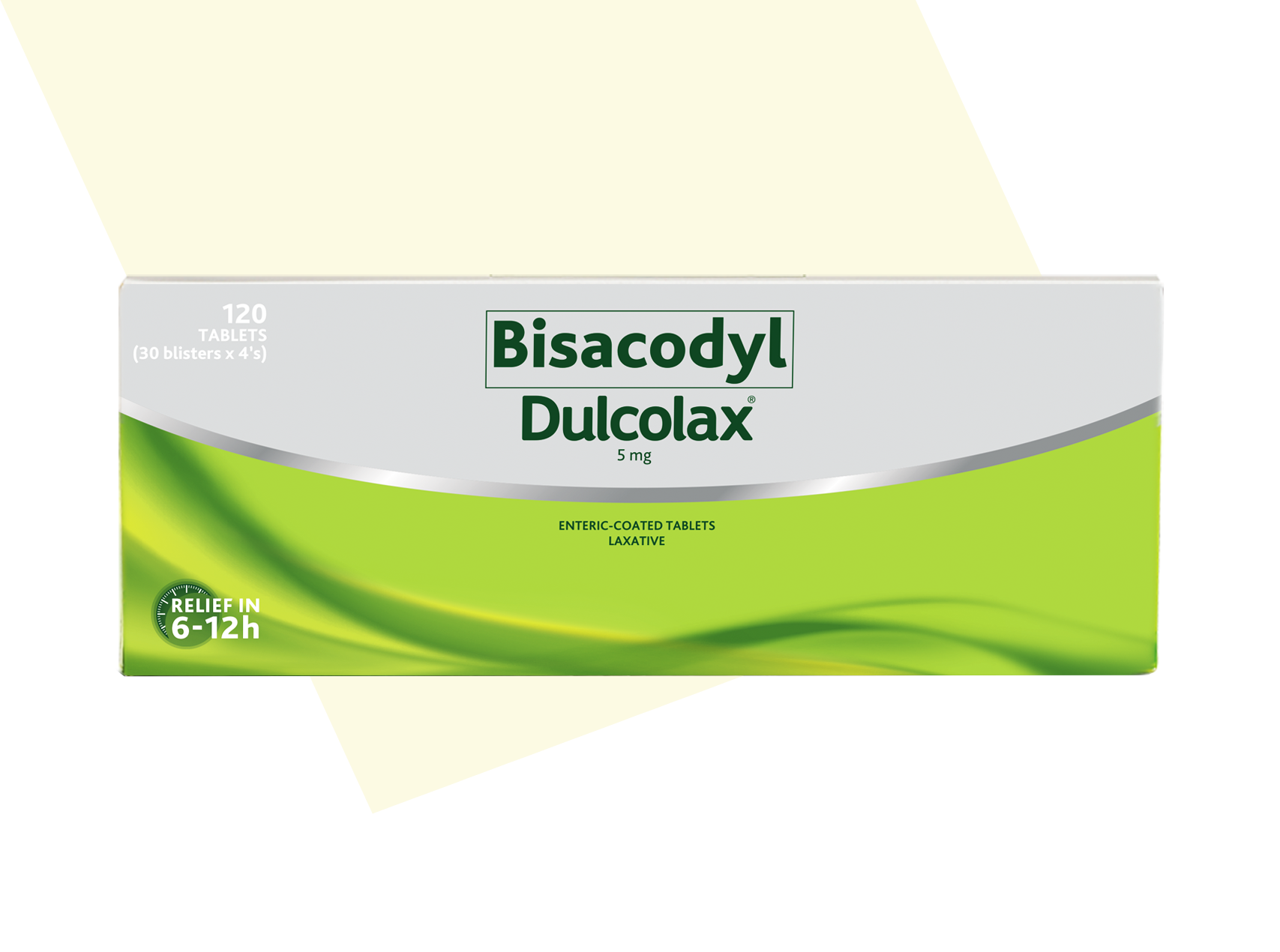
Dulcolax® Coated Tablets
Stimulates bowel movements by helping facilitate transit and evacuation of the stool overnight (between 6-12 hours)

Dulcolax® Adult Suppositories 10 mg
Stimulates bowel movements by helping facilitate transit and evacuation of the stool in about 20-30 minutes.
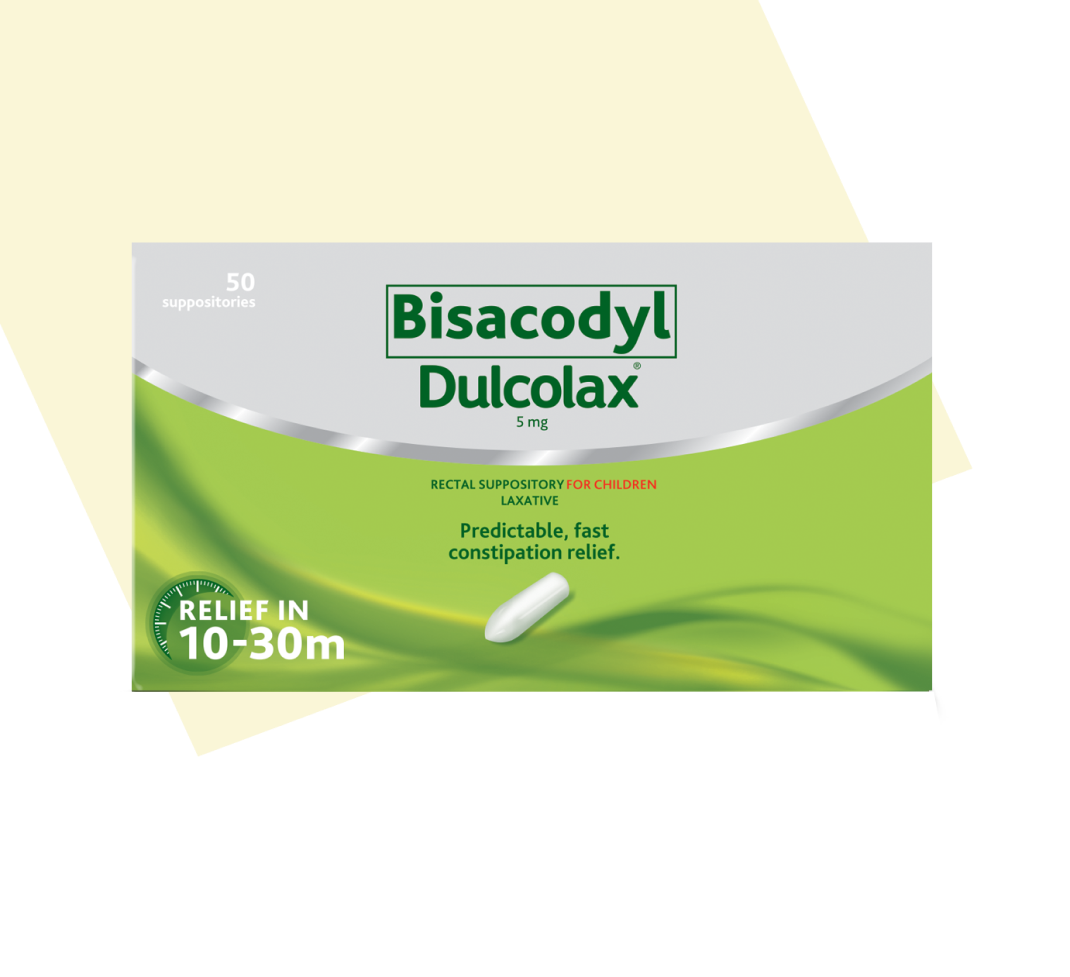
Dulcolax® Pedia Suppositories 5 mg
Stimulates bowel movements by helping facilitate transit and evacuation of the stool in about 20-30 minutes.
-
Dulcolax® Coated Tablets
Stimulates bowel movements by helping facilitate transit and evacuation of the stool overnight (between 6-12 hours)
-
Dulcolax® Adult Suppositories 10 mg
Stimulates bowel movements by helping facilitate transit and evacuation of the stool in about 20-30 minutes.
Dulcolax® Pedia Suppositories 5 mg
Stimulates bowel movements by helping facilitate transit and evacuation of the stool in about 20-30 minutes.
Stay informed
Constipation symptoms such as bloatedness, gassiness and hard dry stool can be extremely bothersome and persistent. Because we know how frustrating and stressful these periods can be, we can help identify the causes for constipation and how to prevent it.

What are the daily habits that can cause constipation?
Our daily life habits have a strong impact on our body functions, including our digestive system. The result may be that you get constipated. But a little goes a long way. Making simple changes to your lifestyle habits is the first step for most people.

How can getting older cause constipation?
As we get older, the bowel muscles in the digestive tract need a little bit more time to move food and stool through the intestines. The resulting constipation is a frequently reported bowel symptom in the elderly with considerable impact on quality of life. Understand how age can change your body and how to adapt to help yourself feel better.

Constipation during pregnancy – a common phenomenon
During pregnancy, certain hormones increase and trigger many changes in the body. Pregnant women frequently suffer from difficult and infrequent bowel movements, hard and dry stools, abdominal pain and discomfort. Although not dangerous in most cases, symptoms of constipation should be addressed properly.
- Wald, A., Scarpignato, C., Mueller-Lissner, S., Kamm, M. A., Hinkel, U., Helfrich, I., Schuijt, C., & Mandel, K. G. (2008). A multinational survey of prevalence and patterns of laxative use among adults with self-defined constipation. Alimentary Pharmacology & Therapeutics, 28(7), 917–930.
- Werth, B. L. (2019). Epidemiology of constipation in adults: Why estimates of prevalence differ. Journal of Epidemiological Research, 5(1), 37–49.
- Kamm, M. A., Mueller-Lissner, S., Wald, A., Richter, E., Swallow, R., & Gessner, U. (2011). Oral bisacodyl is effective and well-tolerated in patients with chronic constipation. Clinical Gastroenterology and Hepatology, 9(7), 577–583.
- Müller-Lissner, S. A., Kamm, M. A., Scarpignato, C., & Wald, A. (2005). Myths and misconceptions about chronic constipation. American Journal of Gastroenterology, 100(1), 232–242.
- Corsetti, M., Landes, S., & Lange, R. (2021). Bisacodyl: A review of pharmacology and clinical evidence to guide use in clinical practice in patients with constipation. Neurogastroenterology & Motility, 33(10), e14123. https://doi.org/10.1111/nmo.14123
- Harms, R. W. (2011). Mayo Clinic guide to a healthy pregnancy. Mayo Foundation for Medical Education and Research.
- Opella. (2021). Sanofi PPI certification A06A A06B MAT Oct 2021. Retrieved from https://www.dulcolax.com/en-ph